

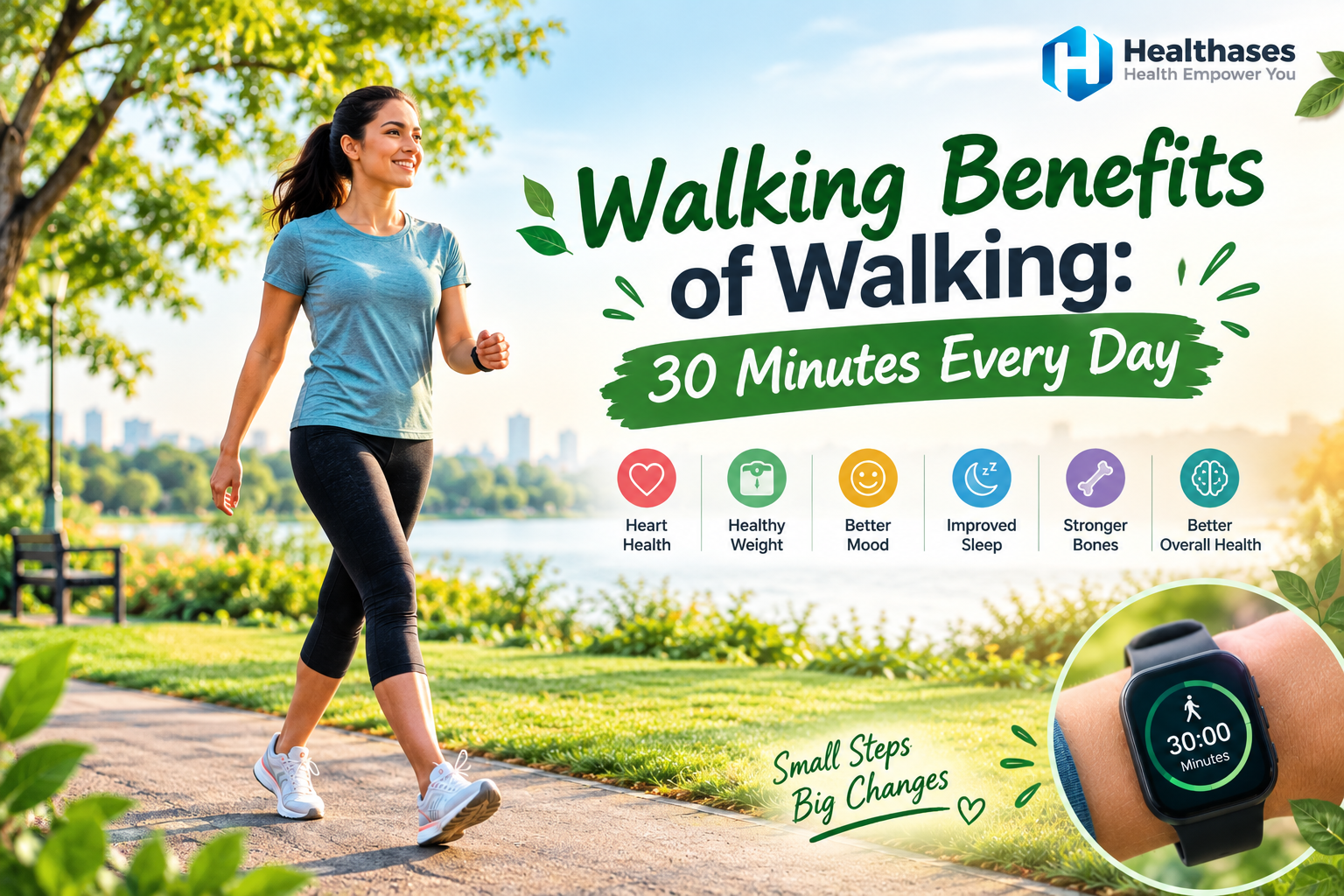
Walking is an easy way to be more active. If you walk for 30 minutes each day, then the walking benefits of walking build slowly. Over time, walking can help your heart work better, improve your overall fitness, and support weight management. It may also lift your mood. Plus, daily tasks can feel less tiring when you keep moving.
You can start without a gym and without costly gear. For many adults, a 30-minute brisk walk on most days can bring you closer to the common goal of 150 minutes of moderate activity in a week.
This article looks at the benefits of walking. It also covers what you might notice if you walk every day. It then reviews options like walking after meals, walking on a slope, walking backwards, and using a weighted vest, and how each can change the feel of your workout.
Key Takeaways
- Walking for 30 minutes can help you meet your weekly movement goal.
- Doing this regularly may benefit your heart. It can also help with sleep and mood. Many people also notice changes in blood pressure. It supports bones too. It may make it easier to keep a healthy weight.
- If you walk after eating, it might lower the spike in blood sugar that can happen after a meal.
- If you use an incline, the walk usually feels harder. That means you may get a higher workout demand.
- Walking backward could aid balance and some rehab plans. Still, you need to watch your footing and stay safe.
- Wearing a weighted vest can raise the effort your body has to handle. It can also add stress to bones and muscles. Start with it slowly and build up over time.
- Walking is most helpful when it fits into an overall healthy routine. It should not replace strength work or medical care.
Table of Contents
- Walking Benefits of Walking for 30 Minutes
- Benefits of Walking Daily and Every Day
- Benefits of Walking After a Meal
- Benefits of Walking on Incline
- Benefits of Walking Backwards
- Benefits of Walking With a Weighted Vest
- How to Build a 30-Minute Walking Routine
- Frequently Asked Questions
- Final Thoughts
Walking Benefits of Walking for 30 Minutes
Walking helps because it is easy for many people to do. You can do it outside or inside on a treadmill. Some people walk around work. Bad weather does not stop you either, since you can still get steps in at home.
If you walk fast for about 30 minutes, it can count as moderate exercise. The CDC says adults should get 150 minutes of moderate aerobic activity each week. They should also do muscle work at least two times per week. Walking for 30 minutes on five days gets you to that weekly aerobic goal.
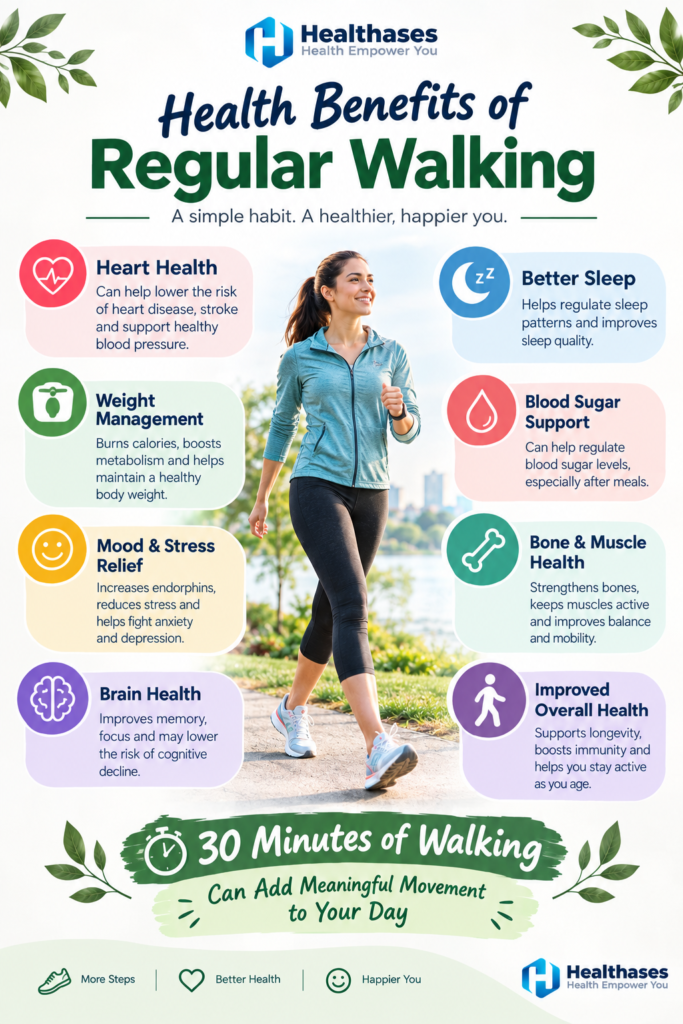
1. Walking Supports Heart Health
Moving regularly can lower the chance of heart problems, stroke, and other long-lasting illnesses. A brisk walk can also improve how well your heart and lungs work, as long as the pace fits your level.
The main point is to keep going. One walk can make you feel better right away, but regular walks are what help over time.
2. Walking Helps with Weight Management
Walking burns calories. When you add more steps each day, it can help you reach the calorie shortfall your body needs for fat loss, along with sensible eating.
Still, walking is not a quick fix. Food choices, sleep, strength work, other kinds of movement, and your own healthy living all play a vital role.
3. May Improve Mood and Reduce Anxiety
One of the useful benefits of walking is that physical activity can support mental well-being. The CDC notes that physical activity can reduce short-term feelings of anxiety and lower the risk of depression over time.
Even a short walk can also provide a break from prolonged sitting or screen time.
| Expert Tip: If you feel unmotivated, try a smaller goal. Aim to finish the first 10 minutes. Do not worry about the full 30 minutes at first. When you begin, it is usually simpler to keep going. |
4. Walking Can Help You Sleep Better
When you move regularly, many people notice they fall asleep easier and sleep more soundly. A steady walk during the day, or a short walk in the evening, may help if you sit most of the day.
That said, do not treat walking as a cure for long-lasting insomnia or other sleep issues like parasomnia sleep disorders. If sleep troubles keep coming back, it is best to get help from a doctor.
Benefits of Walking Daily and Every Day
The benefits of walking daily feel better when it turns into something you keep doing, not just something you try once in a while.
You do not have to push yourself hard every day. Some days are for a faster, focused pace. Other days can be slow and meant to help you recover.
The CDC notes that any movement helps, even if it is not a full workout. Adults can break up their activity across the week.
What can 30 minutes of walking every day do?
A simple 30-minute walk can help with a few everyday goals.
- It can raise how active you are overall.
- It can cut down the hours you spend sitting.
- It can improve heart and lung fitness.
- It may help you manage a healthy weight.
- It can help you stay mobile as you get older.
- It can support balance and coordination.
- It can make it easier to sleep well.
- It can support your mood and mental health.
- It can make daily tasks like stairs and carrying groceries less hard.
The CDC also says that being active regularly helps with bone health and brain health. It also supports healthy aging. At the same time, it lowers the chance of several long-term health problems.
Is walking every day enough exercise?
Walking is a good way to build aerobic fitness. Still, it is not the only kind of training you need.
To get a more rounded plan, add strength work a couple of times each week. Many adults can also try balance drills, especially later in life.
Benefits of Walking After a Meal
Some walking studies focus on when you walk in relation to meals. After eating, a walk may help you manage the usual jump in blood sugar. A review of randomized trials, with a meta-analysis, reported that the benefits of walking after a meal lowered the rise in glucose after eating. This was compared with walking before the meal and with not walking at all. That point matters if you are trying to keep blood sugar steady.
Benefits of walking after eating
A quick walk after you eat can help you move more each day. You do not need to plan a separate workout.
Here are a few ideas.
- Right after breakfast: Step outside for a few minutes before you start your tasks.
- After lunch: Walk around your office or head outside for a short stretch.
- After dinner: Take an easy walk in your area instead of sitting down right away.
You do not have to aim for 30 minutes every time. Even brief walks can add up.
| Did You Know? You might not realize this. You do not need to do physical activity in one long block. Try splitting it into shorter times during the week. That can make your weekly goal feel more doable. |
If you have diabetes, or if you take medicines that lower blood sugar, think about what fits your own body. Get guidance from your clinician, especially if you plan to change how you exercise.
Benefits of Walking on an Incline
Going uphill, or raising the treadmill incline, changes what your body has to do.
Studies of treadmill walking suggest that a higher grade leads to more oxygen use and higher energy use. That means you can make a walk harder by changing the incline, even if you keep your pace fairly steady.
The benefits of walking on incline may include:
- You may work your heart and lungs harder.
- You may burn more energy.
- Your lower body may get a tougher workout.
- It can be an option instead of walking faster.
- It may call on muscles that help with climbing.
That said, higher effort is not always the best plan.
If you are just starting incline walking, begin with a low incline and a pace that feels easy. Then raise one factor at a time. You can add time, or you can raise speed slowly, or you can increase the incline. Do it step by step, not all at once.
If you have joint issues, trouble with balance, or a medical condition, ask a clinician or qualified trainer for guidance before using higher inclines.
Benefits of Walking Backwards
Walking backward, also known as retro walking, is not the same as moving forward. It changes how your legs line up, how you keep your balance, and what you pay attention to with your eyes.
Studies have looked at backward walking in rehab and in work tied to balance. One review reported possible gains in balance skills, but it also pointed out that the available evidence is not very large.
A different review looked at people in rehab programs and asked what happens when backward walking is added. In knee osteoarthritis, that added approach was linked with less pain, better function, and stronger quadriceps muscles.
So, benefits of walking backward may help with:
- Testing balance and coordination
- Practicing movement patterns that differ from usual walking
- Fitting into some rehabilitation plans
- Adding variety to an exercise routine
How to Walk Backwards Safely
Avoid walking backward on a busy road, a rough trail, stairs, or in a packed gym. Pick a wide, flat spot first. Start at an easy pace. Use a wall or rail for support if you need it.
If you have major balance issues, knee pain, a nerve or brain condition, or you have fallen before, talk with a clinician or rehab staff. Ask if this is safe for you.
Benefits of Walking With a Weighted Vest
Wearing a weighted vest makes you work harder when you walk. Each step carries extra mass, so your body must adjust to the added load.
In some studies, researchers reported higher oxygen use with a weighted vest. They also saw higher exercise strain. In addition, there were signs of more stress on the bones compared with walking while unweighted.
Here are the possible benefits of walking with a weighted vest:
- More intensity in the session.
- More burn in terms of metabolism.
- Resistance added without gripping dumbbells.
- Extra stress for the joints and bones.
One more study noted that the body’s effort rose during steep incline walking when a weighted vest was worn.
Benefits of walking with a weighted vest: what to know first
You do not need a weighted vest when you are just starting. If you already walk on a regular schedule, you can add weight slowly. The extra mass makes your body work harder. If you jump to a bigger load too fast, it can strain your joints and muscles more than you need.
Use a small amount at first. Keep your body aligned and tall as you move. Stop right away if you feel pain, feel dizzy, notice odd breathing, or have any other warning signs.
A Simple 30-Minute Walking Routine
You can make your routine simple enough to repeat consistently.
| Time | Activity | Intensity |
| 0–5 minutes | Easy warm-up | Comfortable |
| 5–20 minutes | Brisk walking | Moderate |
| 20–25 minutes | Brisk or gentle incline | Moderate |
| 25–30 minutes | Gradually slow down | Easy |
A good target is to work at a speed that is tough but still lets you talk. If 30 minutes seems hard at first, do briefer walks. Then add time little by little over the next days.
The CDC says to begin easy and move up until you reach the suggested level of activity.
Ways to make walking easier to maintain
Pick a habit you already do each day, then add a walk to it.
For example:
- Go for a walk after lunch.
- Walk while you listen to a podcast.
- Stop and walk for a few minutes during work.
- Park a bit farther than you usually do.
- Use the stairs when it makes sense.
- Walk with a friend or a family member.
- Use a treadmill on days with bad weather.
- Try a new route so it does not feel dull.
The best plan is the one you can do safely and keep up over time.
Frequently Asked Questions (FAQs)
What are the 5 benefits of walking?
Walking may help your heart, support healthy weight, lift your mood, help you sleep better, and build strength in muscles and bones. When you walk often, it also adds movement to your usual day.
What is the 3-3-3 rule for walking?
The 3-3-3 walking idea is not a set medical rule. People and programs use it in different ways. For that reason, use a walking plan that fits your fitness level and your health needs.
Which body part benefits from walking?
Walking works the whole body. It mainly uses the legs and hips, and it calls on your core too. It also makes your heart and lungs work harder. With time, it can help with movement, muscle use, balance, and day-to-day physical ability.
Is it okay if walking is my only exercise?
Yes, walking can be your main exercise, especially if you are starting or trying to stay consistent. Still, adults are usually told to add strength work at least two times each week so overall fitness is balanced.
How often should you walk each day?
A good target is to aim for about 30 minutes of brisk, moderate walking on most days. You can split it into smaller chunks. Pick a plan you can stick with and add time slowly when it feels fine.
Final Thoughts
The walking benefits of walking become especially valuable when the habit fits naturally into your everyday life. A 30-minute brisk walk can support the activity level many guidelines ask for. It can also aid heart health, overall fitness, mood, sleep, mobility, and weight control.
You can change what you do based on what you want. A walk after meals may affect blood sugar after eating. Walking on an incline can make the session harder. Walking backward can test your balance. Using a weighted vest can raise the work your body does, if you use it safely.
You do not have to use advanced methods to get results. Begin at a pace that feels easy. Build up slowly over time. Keep showing up and staying consistent. If you have a long term medical issue, strong joint pain, balance trouble, or another health concern, talk with a qualified healthcare professional before you start or change your plan.
For more helpful tips on health, fitness, food, and wellness, visit Healthases.com.
Author Bio
Healthases Editorial Team makes health, nutrition, fitness, and wellness articles based on evidence. The goal is to help readers understand key points and use them in daily life.
Medical review: Please have this article checked by a trained doctor, physiotherapist, or another suitable healthcare expert before it is published. Add the reviewer’s name and credentials only after the details are confirmed.
Follow us on Instagram | Follow us on Facebook | Follow us on LinkedIn
Medical Disclaimer
This content is meant for learning only. It is not a substitute for medical advice, diagnosis, or care from a qualified professional. People have different needs when it comes to exercise. If you notice symptoms that worry you, stop your workout right away. Get medical guidance promptly if you have chest pain, fainting, very hard trouble breathing, or sudden severe pain with no clear cause.
References
- CDC: Adult Activity: An Overview
- CDC: Health Benefits of Physical Activity for Adults
- CDC: Physical Activity Guidelines
- PubMed: Post-Meal Exercise and Blood Glucose Meta-Analysis
- PubMed: Backward Walking and Balance Systematic Review
- PubMed: Weighted Vest Walking Study
- PubMed: Inclined Walking and Metabolic Energy Study


Leave a Reply