

An anti-inflammatory meal plan usually puts more weight on vegetables, fruit, whole grains, beans, nuts, and seeds. It also includes fish and fats from olive oil and similar sources. At the same time, it asks you to cut back on packaged foods, added sugars, and large amounts of saturated fat.
There is not just one set rule called an anti-inflammatory diet. The point is to follow an eating pattern that gives you more fiber, beneficial plant compounds, and key nutrients. A Mediterranean-style routine is one of the most studied options. A recent review of 33 randomized controlled trials reported better results for some inflammation markers. Still, the changes didn’t match for every marker.
This 7-day meal plan is made for people who are new to this. It does not depend on costly items or healthy recipes. It also does not ask you to follow a rigid list of perfect foods versus banned foods. You can swap meals based on your background, your budget, any allergies, your diet needs, and what you can find where you live.
Key Takeaways
- The anti-inflammatory way to eat focuses on whole foods and foods that are not heavily processed.
- Common staples include vegetables, fruit, beans, whole grains, nuts, seeds, olive oil, and fish.
- Fatty fish provide omega-3 fats. Bright plant foods add fiber and polyphenols.
- You do not have to cut carbs all the way out. You also do not need to live on salads.
- This kind of eating plan is more likely to work when it is practical, and you can keep doing it.
- The plan can be changed if you follow vegetarian, pescatarian, or dairy-free diets.
- Food can help support general well-being. It should not take the place of medical care for inflammatory or long-term diseases.
What Foods Are Included in an Anti-Inflammatory Diet?
An anti-inflammatory meal plan is not about a single miracle food. It is more about the way the meals fit together over time.
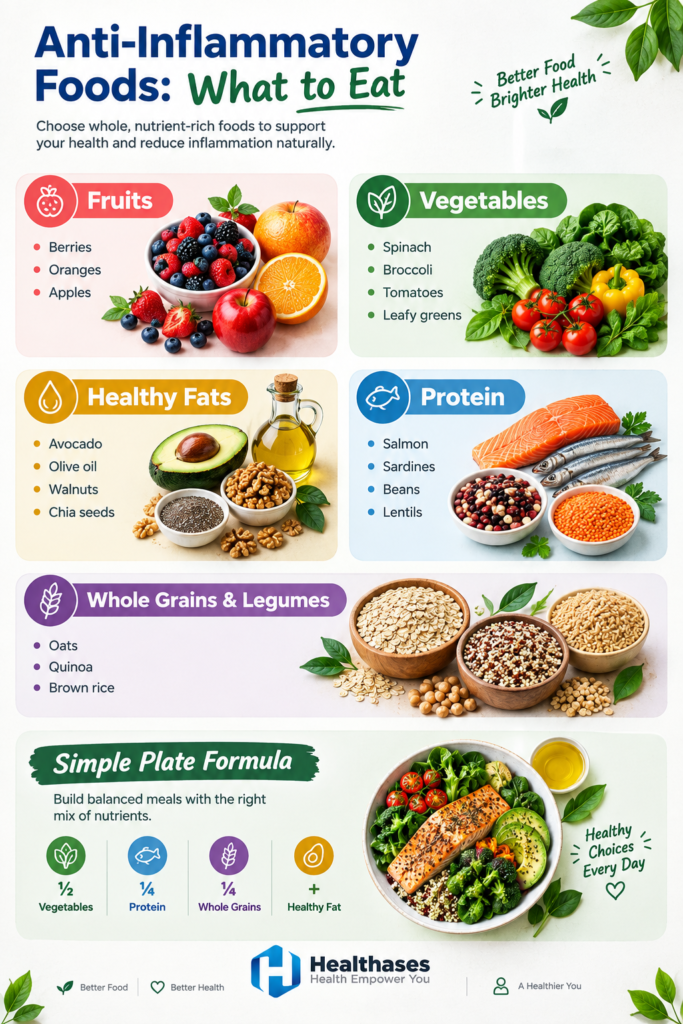
Harvard Health says this approach focuses on vegetables, fruits, whole grains, beans and lentils, nuts, seeds, and healthy oils. It also points you toward foods that are only lightly processed.
At the same time, it asks you to cut back on refined carbs, processed meats, deep-fried items, and products that are heavily processed.
Foods to eat more often
Vegetables:
Spinach, broccoli, kale, carrots, tomatoes, peppers, cauliflower, cabbage, plus other leafy greens.
Fruits:
Berries, oranges, apples, kiwi, cherries, pears, and other whole fruits you can eat as is.
Whole grains:
Oats, brown rice, quinoa, barley, whole-grain bread, and whole-wheat pasta.
Protein foods:
Salmon, sardines, trout, beans, lentils, chickpeas, eggs, skinless poultry, tofu, and plain yogurt.
Healthy fats:
Extra-virgin olive oil, avocado, walnuts, almonds, chia seeds, pumpkin seeds, and ground flaxseed.
Flavor add-ons:
Garlic, ginger, turmeric, cinnamon, herbs, lemon, and spices.
The American Heart Association also points to a way of eating that leans on vegetables, fruits, whole grains, beans, legumes, nuts, fish, seafood, and plant-based oils.
| Expert tip: Skip the hunt for rare “superfoods.” Frozen berries, canned beans, frozen vegetables, oats, lentils, and canned sardines can help you follow an anti-inflammatory eating style without spending as much. |
7 Day Anti-Inflammatory Meal Plan
This plan is a solid place to start, not a doctor-ordered diet. Use your hunger as a guide when you set portions. Also think about how active you are, your age, any health limits, and what you want to achieve.
| Day | Breakfast | Lunch | Dinner | Snack |
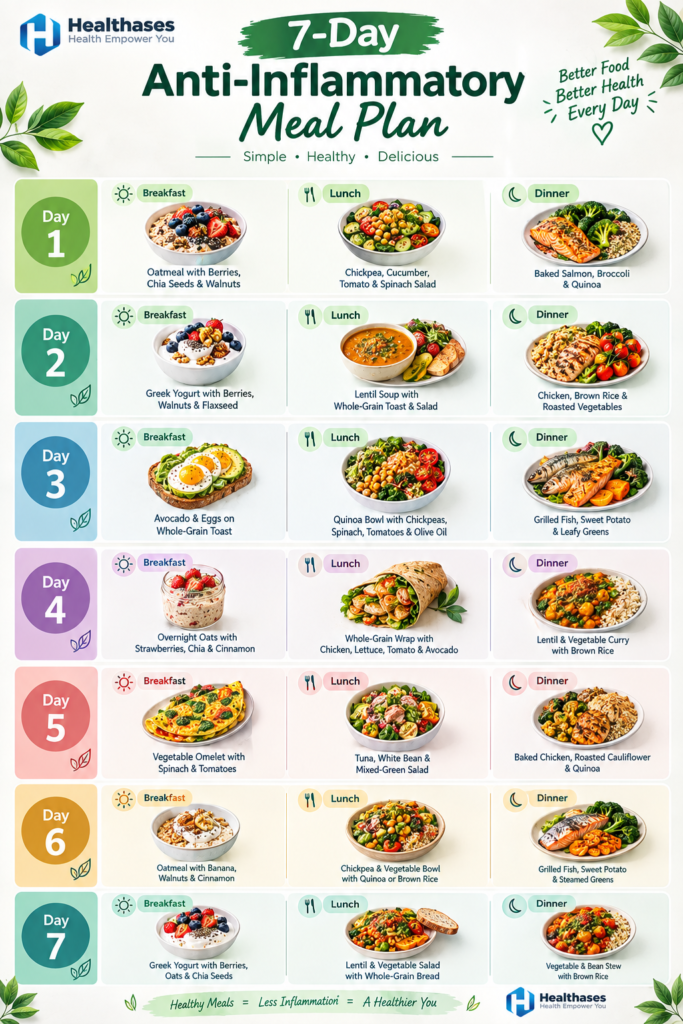
| Day 1 | Oatmeal with blueberries, chia seeds, and walnuts | Chickpea, cucumber, tomato and spinach salad with olive oil | Baked salmon, broccoli and quinoa | Apple with a small handful of almonds |
| Day 2 | Plain Greek yogurt with berries, walnuts and ground flaxseed | Lentil soup with whole-grain toast and side salad | Chicken, brown rice and roasted vegetables | Orange and pumpkin seeds |
| Day 3 | Whole-grain toast with avocado and eggs | Quinoa bowl with chickpeas, spinach, tomatoes and olive oil | Grilled sardines or salmon with sweet potato and greens | Berries with plain yogurt |
| Day 4 | Overnight oats with strawberries, chia and cinnamon | Whole-grain wrap with grilled chicken, lettuce, tomato and avocado | Lentil and vegetable curry with brown rice | Pear and walnuts |
| Day 5 | Vegetable omelet with spinach and tomatoes | Tuna, white bean and mixed-green salad | Baked chicken, roasted cauliflower and quinoa | Apple with natural peanut butter |
| Day 6 | Oatmeal with banana, walnuts and cinnamon | Chickpea and vegetable whole-grain bowl | Grilled fish, sweet potato and steamed greens | Plain yogurt with berries |
| Day 7 | Greek yogurt, berries, oats and chia seeds | Lentil and vegetable salad with whole-grain bread | Vegetable and bean stew with brown rice | Kiwi, orange or a handful of nuts |
How to make this plan easier
You do not have to make seven totally different meals each week. A better plan is to set up a few items ahead of time. Cook a pot of brown rice or quinoa. Rinse your vegetables. Get lentils or beans ready. Portion out some protein so it is there when you need it.
After that, mix and match during the week. Use the same base foods, but change the combinations so it feels fresh.
This approach turns the plan into a simple anti-inflammatory meal plan rather than another complicated diet you may abandon after a few days.
Day 1: Start With Fiber and Healthy Fats
Start your day with oatmeal. Add blueberries, chia seeds, and walnuts on top. This mix includes whole grains, fiber, plant compounds, and fats that are better for the heart.
For lunch, toss together a chickpea salad. Use spinach, cucumber, and tomatoes. Add lemon and olive oil for taste.
At dinner, bake salmon. Serve it with broccoli and quinoa.
Salmon helps because oily fish has long-chain omega-3 fats. The NHS says to eat fish as part of a balanced diet. It also suggests two portions each week, and one of those should be oily fish.
Day 2: Add Legumes and Colorful Vegetables
Greek yogurt can be simple. Use berries on top, then add walnuts and ground flaxseed. For midday, make a hot lentil soup that is hot. Toss in vegetables. Have it with whole-grain toast.
In the evening, grill chicken. Serve it with brown rice and roasted vegetables. When hunger hits between meals, take an orange. Add pumpkin seeds, not a packaged candy-type snack.
This plan helps in a practical way. Beans and lentils bring fiber and plant protein. The vegetables add many vitamins and other plant compounds.
Day 3: Focus on Omega-3 Foods
Start your morning with whole-grain toast, avocado, and eggs.
Later, at lunch, try a quinoa bowl. Add chickpeas, spinach, tomatoes, and cucumber. Finish with olive oil.
For the evening meal, go with grilled sardines or salmon. Pair that with a baked sweet potato and some leafy greens.
If you skip fish, you can swap in tofu, beans, or lentils. Still, plant foods with omega-3 do not match the EPA and DHA from oily fish in a strict nutrition sense.
Day 4: Keep the Plan Flexible
Make overnight oats the night before. Add strawberries, chia seeds, and a pinch of cinnamon.
For lunch, pick a whole-grain wrap. Fill it with grilled chicken, lettuce, tomatoes, and avocado.
At dinner, choose a lentil and vegetable curry. Serve it with brown rice.
You can also use what is already in the fridge. Leftover roasted vegetables from Day 2 can go into your lunch bowl. Less food waste can help keep your meal plan budget-friendly too.
Day 5: Choose Simple, Familiar Foods
Spinach and tomato omelet, quick and simple for breakfast. At lunch, mix tuna with white beans, add mixed greens, cucumber, and more tomatoes. Finish with olive oil.
For dinner, bake chicken and roast cauliflower. Serve it with quinoa. You do not need to make meals look wild just to eat in an anti-inflammatory way. Most of the shift is small. Eat more whole foods, and cut back on foods that are very processed.
Day 6: Use Convenient Healthy Ingredients
Morning meals can be oatmeal. Add banana slices, chopped walnuts, and a pinch of cinnamon.
For midday, try a chickpea and veggie bowl. Use quinoa if you want, or switch to brown rice. Evening meals can be grilled fish. Pair it with sweet potato and some steamed greens.
When fresh fruits and veggies cost too much or are not easy to find, frozen items work well. Frozen berries are fine too.
You can also use canned beans and lentils. They cut down on prep. Pick reduced-sodium packs when you can. If not, rinse the beans before you cook with them.
Day 7: Build a Meal You Can Repeat
Start Saturday and Sunday with Greek yogurt mixed with berries, oats, and chia. At midday, eat a lentil and vegetable salad. Add a slice of whole-grain bread on the side. In the evening, go with a filling vegetable and bean stew. Serve it with brown rice.
This is not about rushing through seven days and then going back to the same old routine. Use this meal plan as a base you can follow again and adjust as you like.
Foods to Limit on an Anti-Inflammatory Meal Plan
You do not need to mark specific foods as totally off limits. Still, items that are heavy in added sugar, refined carbs, unhealthy fats, salt, or lots of processed parts are usually best as occasional choices, not the main base of what you eat.
It helps to cut back on things like these:
- Processed meats like sausages, bacon, and hot dogs
- Deep-fried Foods
- Sugary drinks
- Sweets and desserts often
- Foods made with highly refined grains
- Ultra-processed Snack foods
- Alcohol in large amounts
- Big portions of foods high in saturated fat
The American Heart Association says to limit added sugars, highly processed foods, refined carbohydrates, saturated fats, and processed meats within an overall healthy eating plan.
One key point is this. Having a cookie now and then does not “ruin” your eating plan. What you do most days matters more than what happens in a single meal.
| Did You Know? Eating well does not always cost a lot. Try beans and lentils. Add oats when you can. Choose vegetables that are in season, and do not ignore frozen fruit. If you need an easy protein, canned fish works too. These options can cover many of the same food needs people look for in budget-friendly items. |
Can an Anti-Inflammatory Diet Treat Inflammation?
Not alone. A diet that reduces inflammation can help your general well-being. It may also affect lab results that relate to inflammation. Still, it is not a replacement for medical care. Do not call it a cure for arthritis, autoimmune disease, psoriasis, inflammatory bowel disease, or other health problems.
Some studies suggest Mediterranean-style eating may help certain inflammation markers. But the findings are not the same across groups. They also depend on the people studied, the foods eaten, and which markers were used.
If you already have an inflammatory diagnosis, keep to the plan made by your clinician. If you are looking at skin health, you can check the Healthases article on psoriasis treatment at home.
Final thoughts
This 7-day anti-inflammatory meal plan is meant to help new people get started. It focuses on eating more foods that are not highly processed. It does not require strict or extreme rules.
The menu leans on vegetables and fruit. It also uses legumes, whole grains, fish, nuts, seeds, and other healthy fats. These choices line up with Mediterranean-style eating and other patterns that support heart health.
Try not to chase perfection. One meal will not fix everything. One processed snack will not erase good habits either. What you do over time matters.
Begin with small, doable steps. Add more vegetables to your plate. Pick whole grains more often. Use beans or lentils when you can. If you like fish, include it on a regular basis. Swap out highly processed snacks for whole food options.
If you have a health issue, a food allergy, kidney disease, diabetes, or you are pregnant, talk with a doctor or a registered dietitian first. This is also important if you take medicines that can be affected by food.
Want more practical guides on health and nutrition? Check out Healthases for helpful, evidence-based content.
FAQs
What is the best anti-inflammatory meal plan for beginners?
A good beginner menu leans on vegetables, fruit, whole grains, beans, nuts, seeds, fish, lean meats, and healthy fats. The Mediterranean style works well for many people since it is not too strict and has strong support from studies.
What can I eat on an anti-inflammatory diet?
Pick from vegetables, fruits, berries, beans, lentils, whole grains, nuts, seeds, olive oil, fish, eggs, poultry, tofu, and plain yogurt. Focus on foods that are not highly processed. Do not feel you must follow one fixed list.
Is there a free anti-inflammatory meal plan?
Yes. There is a seven-day outline in this article. It is a starting point you can change. Swap items to fit your budget, your culture, your taste, any allergies, and what you can find nearby.
Are eggs inflammatory?
No, eggs do not have to be left out by default. They bring protein and key nutrients. What matters most is your full eating pattern and the foods you pair with eggs over time.
Is rice allowed on an anti-inflammatory diet?
Yes. Choose brown rice and other whole grains when you can. They tend to have more fiber than refined grains. White rice can still work in a balanced plan, especially with vegetables, beans, fish, or another protein.
Author and Medical Review
Written by:
Healthases Editorial Team
The Healthases Editorial Team works to share health and wellness writing in a clear way. They rely on solid medical and nutrition references.
Medical Disclaimer
This piece is only for general learning. It is not meant to replace a health disclaimer, a diagnosis, or care from a clinician. Food needs differ by person. If you have a health issue, use any medicine, or follow a special diet, talk with a licensed healthcare provider before you make major changes to how you eat.
References
- Harvard Health Publishing. Anti-inflammatory diet: Foods that help reduce chronic inflammation.
- Keshani M, et al. Mediterranean Diet Reduces Inflammation in Adults: A Systematic Review and Meta-analysis of Randomized Controlled Trials. Nutrition Reviews, 2026.
- American Heart Association. What is the Mediterranean Diet?
- NHS. Eating a balanced diet.
- Harvard Health Publishing. Quick-start guide to an anti-inflammatory diet.
- PubMed. Dietary Patterns Associated With Anti-inflammatory Effects: An Umbrella Review of Systematic Reviews and Meta-analyses.



Leave a Reply