

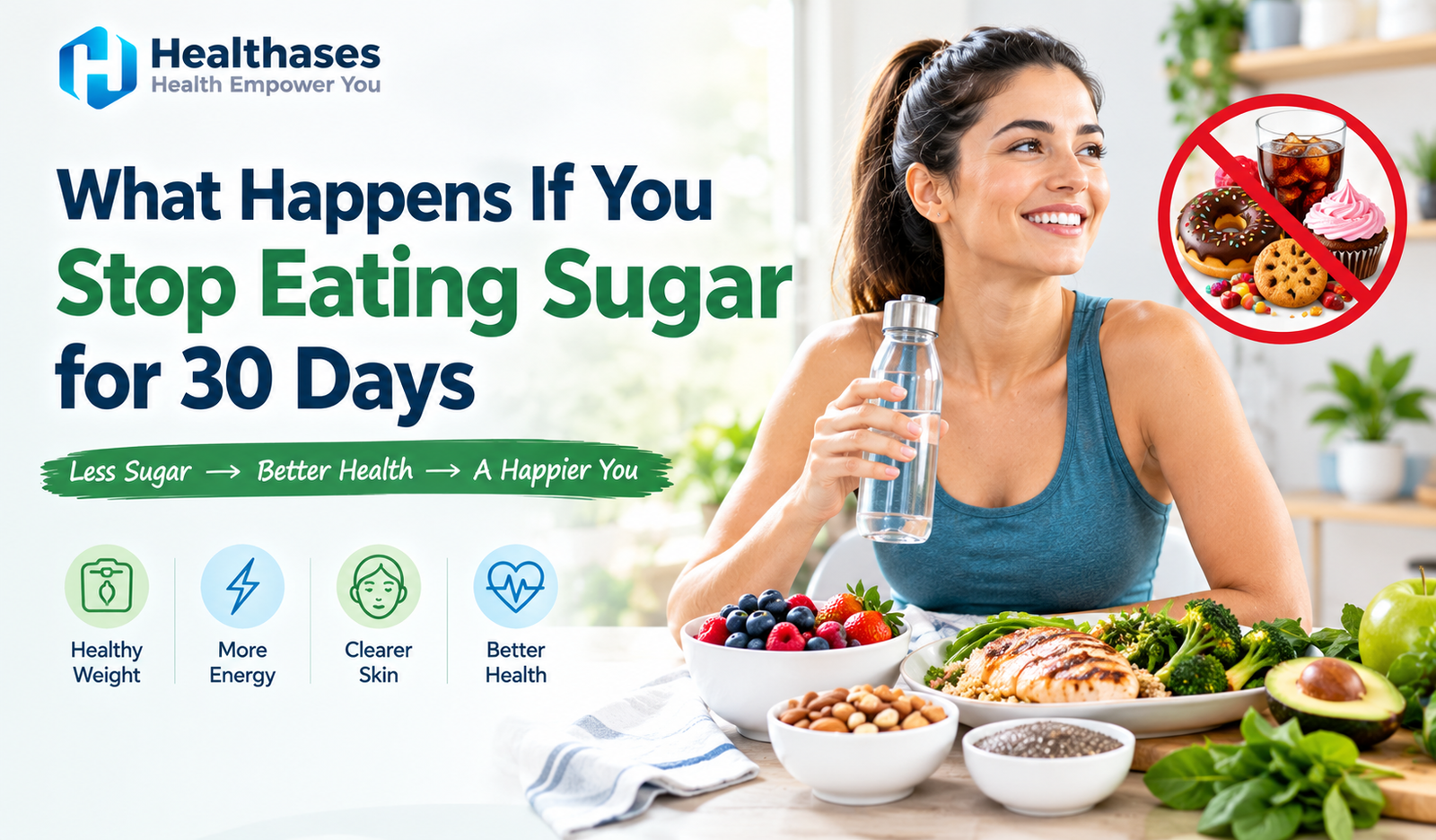
What happens if you stop eating sugar for 30 days? Some people notice less craving for sweet foods. You might also see small shifts in how you eat. If you used to drink sugary drinks or snack on sweets a lot, your total calories could drop. Still, it is not a sure thing. The outcome depends on what replaces the sugar.
This kind of no-sugar challenge is not the same as cutting out all fruit or all carbs. You can still eat vegetables, fruit, and plain milk. Sugar that comes naturally in whole fruit and milk is not the same as added sugar. WHO says to keep free sugars under 10% of your daily energy. They also note that going lower than 5% may bring extra benefits.
In the rest of this guide, we cover what people often notice in the first weeks of a 30-day no-sugar challenge. We also talk about what “sugar withdrawal” may feel like, which foods can help you feel full, and how to set up a plan you can actually follow. Finally, we explain what results you may expect by the end of the month.
For more informative blogs keep visiting healthases.com.
Key Takeaways
- Cutting added sugar can lower calories from sweet drinks, desserts, candy, and snack foods that taste sweet.
- You do not have to drop all fruit, or skip plain milk, to cut added sugar.
- For some people, cravings can show up in the first few days.
- In a 2026 study, some adults who reduced free sugar said they felt cravings, less energy, body aches, and a lower mood.
- Not everyone had the same experience.
- Losing weight can happen if cutting sugar reduces total daily calories, but it does not happen by default.
- A plan you can keep up with often helps more than trying to avoid every food that has some sugar.
What Does “No Sugar” Actually Mean?
Before you start a 30-day no-sugar challenge, you should be clear on what you are cutting out.
“No sugar” can sound odd, since sugar is already found in some healthy foods too.
Foods that naturally contain sugar
You can still include these foods in a healthy diet:
- Whole fruits
- Vegetables
- Plain milk
- Plain yogurt
- Some unsweetened plant-based foods
Foods high in added or free sugar
During a no-sugar push, many people cut back on these foods:
- Soft drinks and other sweet drinks
- Candy and chocolate
- Cakes and pastries
- Cookies
- Ice cream
- Sweetened breakfast cereals
- Flavored yogurt
- Sweet coffee and sweet tea
- Syrups and sweet sauces
- Packaged desserts in general
WHO says “free sugars” means sugars put into foods and drinks. It also includes sugars that occur in honey, syrups, fruit juice, and fruit juice concentrates.
The American Heart Association makes a similar split. It talks about sugars that show up naturally versus sugars that get added. It also urges people to keep added sugar low.
| Expert Tip: For most people, “cutting sugar” works best as reducing added or free sugars. It is not the same as removing whole, healthy foods like berries, apples, oranges, or plain dairy. |
What Happens If You Stop Eating Sugar for 30 Days?
So, what happens if you stop eating sugar for 30 days? People react in different ways, so the results are not the same for everyone. Still, you might see some common shifts as you swap sweets for foods that bring more vitamins and other nutrients.
Days 1–3: Cravings May Be the Biggest Challenge
In the first few days, it is common to crave your usual sweet snacks.
If you drink soda often, put sugar in your coffee, or have dessert every night, it can feel hard to stop.
A recent study looked at 203 adults who tried to cut out free sugars. People said they had strong cravings and struggled to stay without sugar. A few also mentioned feeling tired, having body pains, and feeling low.
This does not mean every person will have a medical withdrawal issue.
Days 4–7: Your Routine Starts to Change
By the end of week one, you might notice you reach for sweet foods more than you thought.
You may also spot extra sugar in items you did not expect, like sauces, cereal, flavored drinks, snacks, and packaged foods.
Try not to focus only on what you must skip. Instead, make your meals using:
- Protein
- Vegetables
- Whole grains
- Beans and lentils
- Healthy fats
- Whole fruit
- Unsweetened dairy or a good alternative
With that setup, a no-sugar diet plan for 30 days often feels easier to stick to.
Week 2: Your Food Choices May Become Easier
In the second week, some people say their cravings feel more under control.
Still, studies do not back the claim that sugar is addictive for everyone in the same way that drugs can be. People argue about what “sugar addiction” really means and whether it fits.
What you notice might be tied more to daily habits and learned triggers. It can also relate to how reward feels to you, your schedule, and whether tasty foods are easy to grab.
Think about a common example. If you usually eat cookies while you sit down to watch TV, then the TV routine may start to act as a signal. You may reach for something sweet without thinking much.
Because of that, small changes in your routine may matter as much as swapping the foods you eat.
No Sugar for a Month Before and After: What Can Change?
Some people who try a month with no sugar for a month before and after pictures often assume they will see big body changes.
In real life, the outcome is not always that clear.
If you cut added sugar and that leads you to eat fewer calories overall, you might lose some weight over time. But if you swap sweet foods for bigger amounts of foods with lots of calories, your weight might stay about the same.
For more information read our blog on Transform Your Body With a 7 Day Protein Diet Plan for Weight Loss.
Potential changes after 30 days may include:
- Less soda and sweet drinks
- Fewer desserts
- Read the food label more often
- Cook more meals at home
- Cut back on added sugar
- Notice changes in cravings
- Maybe fewer calories overall
- Adopt better care for teeth
Cutting free sugar helps your mouth. The WHO lists it as a key cause of tooth decay. It says to keep free sugars under 10% of your total daily energy. It also notes extra gains if you stay under 5%.
| Did You Know? The CDC says a 12-ounce soda can has over 10 teaspoons of added sugar. |
Symptoms of Detoxing From Sugar: What Should You Expect?
People online often talk about “symptoms of detoxing from sugar,” but the term “sugar detox” can be misleading.
Your body does not require a special detox plan just to handle regular sugar in food.
If you cut sweet items all at once, you might notice shifts that come from less sugar in your routine. You could see changes in cravings, how you eat, and what your overall diet looks like.
Common symptoms people may notice
Some people report these symptoms:
- Strong urges to eat sweets
- Feeling hungry between meals
- Headache
- Low energy
- Being more irritable than usual
- Mood shifts
- Trouble focusing
Work on cutting sugar is still in progress. In the recent study we talked about before, the symptoms did not look the same for everyone. Some people got one set of effects, while others had different ones.
So it is not safe to assume that every headache or tired spell on a no-sugar diet means “detoxing.”
Other things can play a role too. These include not eating enough calories, drinking less water, stopping caffeine, sleeping poorly, or skipping meals.
Sugar Withdrawal Symptoms Timeline
There is no single, medically proven schedule for when sugar withdrawal symptoms timeline show up. It does not work the same for everyone.
That said, some people notice stronger cravings and more discomfort at the start, right when they cut back on very sweet foods.
| Period | What you may notice |
| Days 1–3 | Cravings, habit-related urges, possible headache or low energy |
| Days 4–7 | Cravings may continue but routines begin changing |
| Week 2 | Sweet-food habits may become easier to manage |
| Week 3 | Reading labels and choosing alternatives may feel more automatic |
| Week 4 | You may have a clearer idea of which foods you actually want to keep limiting |
This is a practical way to think about the topic, not a health forecast.
In one human study done, researchers saw that participants showed different patterns in how severe their symptoms were. That supports the idea that people do not react in the same way when they cut down on sugar.
No Sugar Diet Food: What Can You Eat?
A good food list for a no-sugar diet food should put nutrition first. It should not just swap sugar for packaged “sugar-free” snacks.
Protein-rich foods to include:
- Eggs
- – Chicken
- Fish
- Lean meat
- Tofu
- Lentils
- Beans
- Chickpeas
- Plain Greek yogurt
Fruits
You can keep whole fruit in your daily meals.
Good options include:
- Apples
- Berries
- Oranges
- Pears
- Kiwi
- Peaches
Whole fruit gives your body helpful nutrients and fiber. The idea is to cut back on added sugar, not to avoid the sugar that is naturally in fruit.
Healthy fats from real foods.
- Avocado
- Nuts
- Seeds
- Olive oil
Natural nut butter. No added sugar.
Whole grains to help you stay full.
- Oats
- Brown rice
- Quinoa
- Whole-grain bread
- Barley
No Sugar Diet Plan for 30 Days
A practical no sugar diet plan for 30 days can be simple. You do not need a full new menu for every single day. Use a set of building blocks. Mix and match from the choices below.
Breakfast
- Eggs, whole grain toast, and vegetables
- Plain Greek yogurt, berries, and nuts
- Oatmeal, cinnamon, and berries
- Vegetable omelet with avocado
Lunch
- Grilled chicken salad with olive oil dressing
- Lentil soup with whole grain bread
- Tuna and bean salad
- Chickpea and quinoa bowl
Dinner
- Salmon, roasted vegetables, and brown rice
- Chicken, sweet potato, and green vegetables
- Lentil curry with vegetables
- Tofu stir fry with brown rice
Snack
- Apple with unsweetened peanut butter
- Nuts
- Plain yogurt with berries
- Carrot and cucumber sticks
- Boiled eggs
This approach of no sugar diet plan still gives you options. It also keeps the plan from feeling too strict.
A Simple 30 Day No Sugar Challenge
To try a 30 day no sugar challenge, go through four steps.
Week 1: Remove the biggest sources
Begin with sodas, juice, candy, desserts, and sweetened coffee or tea.
Week 2: Read labels
Scan labels for added sugar in cereal, sauces, yogurt, snack bars, and other packaged foods.
Week 3: Build better replacements
When you get cravings, try fruit, plain yogurt, nuts, seeds, and meals you make at home.
Week 4: Create your long-term routine
Figure out what you still want to limit after the 30 days end.
This is not just about making it through. The aim is to form food habits you can keep using after the challenge.
What About a Recipe for Cut Out Sugar Cookies?
A recipe for cut out sugar cookies can sound like it clashes with a no sugar plan. Still, there is a key difference.
Most classic cut out sugar cookies include added sugar. If you want to skip added sugar, you can try making them at home with mashed banana or unsweetened applesauce to add sweetness.
Even then, those choices have natural sugars.
Because of that, a cut out cookie recipe should not be called “sugar free” just because it has no table sugar.
A more accurate label is “no added sugar cookies,” but only if the recipe truly has no added sugars. For more healthy recepies keep visiting our latest blogs.
What Should You Drink During a No Sugar Challenge?
Drinks can ruin or help a 30 day no sugar challenge. Many drinks add a lot of sugar, yet you still feel hungry or fine.
Pick options like these:
- Water
- Sparkling water with no added sugar
- Unsweetened tea
- Black coffee
- Water with lemon or lime
- Unsweetened milk or a similar alternative
The CDC says to swap sugary drinks for water. It also suggests choosing foods that have less added sugar.
| Expert tip: If you drink several sweet drinks each day, cut those first. It can be an easy way to cut back on added sugar. |
How Much Sugar Should You Eat After 30 Days?
Wrapping up a 30 days no sugar challenge does not mean you must pick one extreme for life or go back to how you used to eat.
The WHO says to keep free sugars under 10% of your total daily calories. It also notes that going below 5% can add extra benefits. If you eat around 2,000 calories in a day, 10% is about 50 grams of free sugar.
The American Heart Association gives a tighter limit for added sugars. It recommends that most women stay at or below 25 grams per day. For most men, it says no more than 36 grams per day.
These guidelines do not line up exactly. That is because the WHO talks about free sugars, while the AHA talks about added sugars.
FAQs
How much weight will I lose if I stop eating sugar for a month?
There is no single number for weight loss after you cut out sugar for 30 days. How much you lose depends on how many calories you eat each day, how active you are, your starting body weight, and what you eat instead of sugary foods. If you cut back on added sugars and that also lowers your total calories, you might see weight loss over time.
What happens if we don’t eat sugar for 3 months?
Cutting down added and free sugars for three months can help you eat fewer calories. It may also make your diet better overall and support weight control. It can even lower the chance of tooth decay. You do not need to remove sugars found in whole fruit or in milk. A well rounded diet can include these foods.
Does quitting sugar improve skin?
Some people notice fewer breakouts after they cut back on sweet foods. Still, it does not happen for everyone. Studies point to the idea that eating in a lower glycemic way may help acne for some people. But more studies are needed. Skin also depends on things like genes, hormones, skincare habits, and other factors.
Is it good to quit sugar permanently?
For many people, it can help to cut down on added sugars for the long term. This is especially true for sugary drinks, candy, and very processed foods. But you usually do not need to avoid every form of sugar. Fruit and vegetables have natural sugars, and they also bring fiber and other useful nutrients. These can fit in a healthy eating plan.
Will I lose belly fat if I cut out sugar?
Less sugar may help with belly fat if it makes you eat fewer calories and lose weight. But you cannot pick one area of the body and erase fat just by cutting sugar. If you replace sweets with foods like vegetables, fruit, protein, and whole grains, you may support weight loss and overall body fat reduction.
Final Thoughts
So, what happens if you stop eating sugar for 30 days? What might you notice first? Often it is not a sudden body makeover. It can be a clearer view of how you eat each day. When you dial back things like sweet drinks, desserts, candy, and other foods with added sugar, your total intake of sugar may drop. You may also take in fewer calories.
A no sugar challenge tends to go better when you swap foods, not when you live in worry. Try keeping fruit, vegetables, protein foods, whole grains, and other nutrient rich options in your meals. This can make the change feel more normal.
If you get cravings or sugar withdrawal symptoms, or you feel bad in other ways, do not assume there is one set schedule for it. Timing can vary, and symptoms can come from more than one cause. If you have diabetes, an eating disorder, are pregnant, or have any medical or nutrition concerns, talk with a qualified healthcare professional before making big changes.
For more nutrition and wellness information based on evidence, check out Healthases.
Author Bio
Healthases Editorial Team
The Healthases Editorial Team writes about health, nutrition, fitness, and wellness. We use trusted medical and scientific sources. We aim to explain health topics in a way that is easier to follow. We also want readers to talk about their own questions with a licensed healthcare professional.
Medical Review
This piece should be checked by a qualified registered dietitian, a nutritionist, or a physician before it goes live. If a reviewer name and credentials are included, they should be added only after the professional has reviewed the content.
Health Disclaimer
This health descliamer is meant for learning only and it does not take the place of personal medical, nutrition, or dental guidance. People have different dietary needs.
If you have diabetes, kidney problems, an eating disorder, or you are pregnant, check with a qualified healthcare professional first. Also do this if your medicines may be changed by what you eat, or if you have any other health issue.


Leave a Reply