

Author: Dr. Ayesha Khan, Licensed Clinical Psychologist
Reviewed by: Healthases Editorial Board
Updated: October 2026
The Importance of Connection to Heal from Mental Illness
Mental illness is a global issue, not just a personal issue. People all over the world, in all types of communities and work environments, are recognizing the importance of emotional and mental health and how it thrives on connection. This is now where group mental health activities become important.
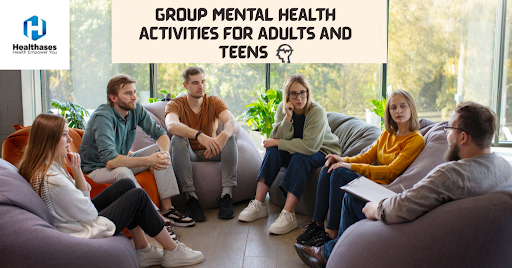
Group environments provide a connection to a sense of belonging and trust. Whether you are facilitating a group therapy session for adults or helping teens in therapy, or practicing activities for Mental Health Month, these moments create space for healing, resiliency, and emotional health to thrive.
In this article, we will briefly outline meaningful group mental health activities; specifically, adult group therapy ideas, therapeutic activities for teens, and the science behind why it works.
Let’s explore a journey of collective healing through meaningful group activities for mental health.
What Are Mental Health Activities?
Before we go any further, let’s clarify what are mental health activities. Mental health activities are activities and experiences designed to foster emotional regulation, psychological well-being, and connection to others.
Mental health activities can include mindfulness activities, group sharing and discussions, creative expression, and team-building activities. Activities for mental health promote self-awareness, empathy, and positive coping strategies, whether engaging in activities holistically or independently.
Group mental health activities are special because they create connection, along with therapy, by helping participants learn through shared lived experience while feeling connected to others in a group setting for emotional and social support.
Why Group Mental Health Activities Matter
The American Psychological Association has indicated that group therapy in therapy and related activities can be equally effective as individual therapy. Participants learn to identify and express their emotions, gain insight, and build new communication skills.
Here are the benefits of mental health activities for adults in groups and teens with the above context:
- Social Connection: Lessens loneliness and offers a sense of belonging.
- Peer Support: Promotes empathy and group problem-solving.
- Skills Training: Builds skills in coping and emotional regulation.
- Self-Dependence: Fosters awareness of one’s own emotions.
- Empowerment: Facilitates a realization that you are not alone in your situation.
These benefits make group activities for mental health an essential component of therapy, support groups, and community-based programs.
Best Group Mental Health Activities for Adults
Adults encounter overwhelming pressures when it comes to work and family obligations. These adult mental health activities will help to reduce stress, increase mindfulness, and encourage discussion.
1. Gratitude Sharing Circle
Everyone has to share at least one thing that they are grateful for. This basic group activity for mental health develops positive mood states and reduces negative thinking.
Tip: Incorporate at least once a week during therapy sessions or in team meetings, to ensure a consistent boost of positivity to the group.
2. Guided Visualization
This relaxation technique consists of imagining a soothing environment (such as a beach or forest). The facilitator supports the relaxation time by having the participant sit in a comfortable position while they close their eyes and take deep breaths. Guided visualization is an established therapeutic activity for adults that helps reduce anxiety and tension.
3. Emotion Charades
The participants act out their emotions (anger, fear, excitement, etc.) for the group to guess. This is a fun adult group therapy idea that provides mental health support, helping to build emotional intelligence and empathy.
4. Group Journaling
Ask participant to jot down their weekly challenge and how well they responded to that challenge in that week. Discuss coping skills in a supportive group environment that encourages open conversations. The group journaling activity develops vulnerability for team healing and encourages healthy reflection- these can be very powerful activities in group therapy.
5. Art Therapy Session
Art, painting, and clay creative modeling can be used as “group therapy exercises for adults”. Group therapy art expression can help transcend speech barriers and allow participants to revisit pent-up emotional issues.
6. Mindful Breathing Practice
A fast and short group mindfulness breathing practice (5 minutes) can also help reduce anxiety. Mindful breathing can be useful, specifically in group therapy settings, like for any activities for Mental Health Month campaigns in workplaces or schools.
Therapeutic Group Activities for Teens
During adolescence, young people may grapple with self-identity, peer pressure, and emotional flooding. Structured mental health activities for teens allow a safe space in which they can express feelings or engage in learning.
Learn with Healthases.com about a few teenage group therapy activities that address healing through fun:
1. Strength Mapping
Ask each teen to identify their individual strengths and share them. After this is done, have peers identify additional strengths they see in each other.
This is a powerful therapeutic activity for teens that builds confidence and improves self-image.
2. The “Emotion Wheel” Game
Every young person chooses a feeling from the wheel (ex., joy, fear, guilt, hope, etc.) and relates a story to it.
This group activity for mental health is ideal in helping the young people understand and express their feelings.
3. Positive Affirmation Cards
The young people design affirmation cards with words such as “I am resilient” or “I am worthy”. In a group, they share their affirmation cards, which is a good way to promote positivity and community.
4. Art Collage Therapy
The young people use magazines and drawings to create collages around their feelings or goals. This is a creative and grounding mental health activity for young people; it is often seen in a therapeutic setting.
5. Group Role-Playing
The young people act out a scenario, such as peer pressure or anxiety. A hands-on group therapy activity in developing a young person’s problem-solving and communication abilities.
Case Study: Restoring Connection Through Group Therapy
Case Study: “The Healing Circle”
Eight adults struggling with burnout participated in group therapy exercises for adults every week. After eight weeks of mindfulness sessions, gratitude circles, and art therapy done together as a community, we found:
- 85% reported increased emotional resiliency.
- 70% experienced decreased anxiety.
- The participants all created lifelong friendships and support systems.
This case illustrates the impact of group mental health activities, not only for emotional relief, but for long-term social healing as well.
Activities for Mental Health Month
Every May, groups celebrate Mental Health Awareness Month. This is an excellent opportunity to provide activities for Mental Health Month that spread awareness and community involvement!
Here are some general ideas:
- Wellness Community Walk: Promotes physical and mental fitness.
- Open Mic Nights: Have people read stories or poems related to mental health.
- Mindfulness Workshops: Focus on teaching people relaxation and mindfulness techniques.
- Team Art Projects: Work collaboratively to create murals related to mental wellness.
The events make conversations around mental health and wellness seem common, accessible, and uplifting.
How to Choose the Right Group Activity
When organizing group activities for mental health adults or teens, think about the following:
- Group Size: Smaller groups help participants feel comfortable with sharing.
- Comfort Level: Begin with more casual activities before addressing issues of deeper emotional importance.
- Purpose: Ensure that each activity relates to the purpose of therapy (i.e., stress relief, knowledge of self).
- Facilitator Guidance: Sensitive group activities should be led by a licensed therapist.
Being intentional will help make sure that the group activity for mental health is effective, safe, and equitable.
The Role of Facilitators in Group Mental Health
The facilitator or therapist is an important person in leading activities in group therapy. Responsibilities include:
- Establishing a space that is free of judgment.
- Encouraging involvement by fostering empathy.
- Noticing the dynamics of the group and emotional indicators displayed by the group members.
- Ensuring confidentiality and respect.
When facilitated professionally and properly, the group therapy sessions are empowering and enriching forms of collective growth.
Conclusion: Healing Together
Whether you need adult group therapy ideas or therapeutic activities for teens, one thing will always hold true: healing is stronger together.
Group mental health activities can foster empathy, resilience, and the feeling of being human and connected to others. They often remind participants that they are not alone, and that caring for each other is a way to be strong together, even when it is uncomfortable or we have some vulnerability.
Normalizing the conversation around emotional health through mental health activities in therapy sessions, the workplace, and communities will encourage a mentally and physically healthy society.
If you or someone you know is having difficulty with mental health challenges, consider joining a group therapy program because sometimes the best way to heal yourself is to heal together.
FAQs About Group Mental Health Activities
1. What are some good group mental health activities for adults?
Examples include gratitude circles, guided visualization, art therapy, and group journaling—all of which aim to promote openness and emotional healing.
2. How do group therapy exercises benefit adults?
They promote trust, emotional expression, and communication skills— three benefits of adult mental health support.
3. What are the best therapeutic activities for teens?
Strength mapping, role-playing, and collage art therapy are among the most engaging and therapeutic mental health activities for adolescents.
4. Can group activities replace individual therapy?
Not necessarily. While group activities complement one-on-one therapy, group therapy adds a social support and shared learning experience.
5. What are some activities for Mental Health Month?
You could set up mindfulness activities, art projects, or mental health awareness activities for schools and work.
6. How can I make group therapy more engaging?
Adding creative games, storytelling, and interactive discussion helps make the group therapy session engaging and impactful.
7. Are group activities suitable for people with anxiety?
Yes, when facilitated properly, group mental health activities can provide individuals who experience anxiety with confidence and support.
Written by: Dr. Ayesha Khan, PhD – Clinical Psychology & Group Therapy Specialist
Reviewed by: Healthases Medical Editorial Team
Published by: Healthases.com – Empowering Health Through Knowledge


Leave a Reply